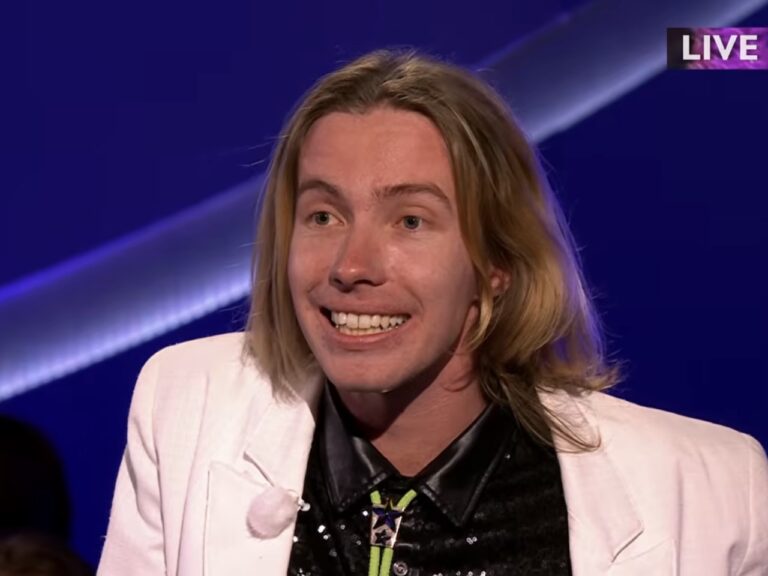
Noam Bettan performing for Israel at Eurovision on May 12, 2026 / Alma Bengtson / EBU
The European Broadcasting Union (EBU) has announced new rules for the Eurovision Song Contest in relation to countries at war.
Russia and close ally Belarus are currently banned from taking part in the competition, the former as a result of the invasion of Ukraine in 2022.
This year five countries – including Spain and Ireland – boycotted Eurovision in protest at Israel’s continued presence in the contest amid the conflict in Gaza, which began in October 2023.
Although not banning Israel from taking part in 2027, the EBU’s new rules mean that a winning country involved in a conflict or any other “sensitive geopolitical situation” will be prevented from hosting the following year’s contest.
A press release explained: “The Rules of the Contest now say the winning broadcaster will automatically be ineligible to host the Contest if an armed conflict, a sensitive geopolitical situation, or any other situation materially affects the security, safety or stability of their state or immediate region.
“Where deemed necessary, the EBU may commission an independent security assessment of the winner’s region. Following that assessment, the EBU will consult the Reference Group to determine whether the winning Member is able to safely host the Contest.
“If the winning Member is deemed unable to host, the EBU will identify an alternative Host Broadcaster. The appointed Host Broadcaster will assume all rights, obligations and liabilities associated with hosting the Contest, including responsibility for the organisation, production and staging of the event. The Host Broadcaster will organise the Contest in its own right and will not be required to stage the event on behalf of another Member.”
The rule change comes after the United Kingdom previously stepped in to host the contest in 2023 following Ukraine’s triumph in 2022.
Other rule changes include raising the minimum age for participating acts from 16 to 18 and a ban on the use of autotune or other pitch-correction measures on the lead vocals.
ESC director Martin Green said: “The Eurovision Song Contest is constantly evolving, and our annual review of the Rules is an important part of making sure the Contest remains fair, transparent and consistent for all those who participate, including the millions who engage with the event globally.
“Guided, as always, by feedback from our Members, we have clarified and strengthened several areas for 2027. These changes are about giving everyone involved greater clarity, protecting artists and ensuring the Contest continues to provide a safe and welcoming environment, while preserving the spirit and integrity that make the Eurovision Song Contest so special.”
The next contest – the first to feature Canada – will be staged in the Bulgarian coastal city of Burgas in May 2027.