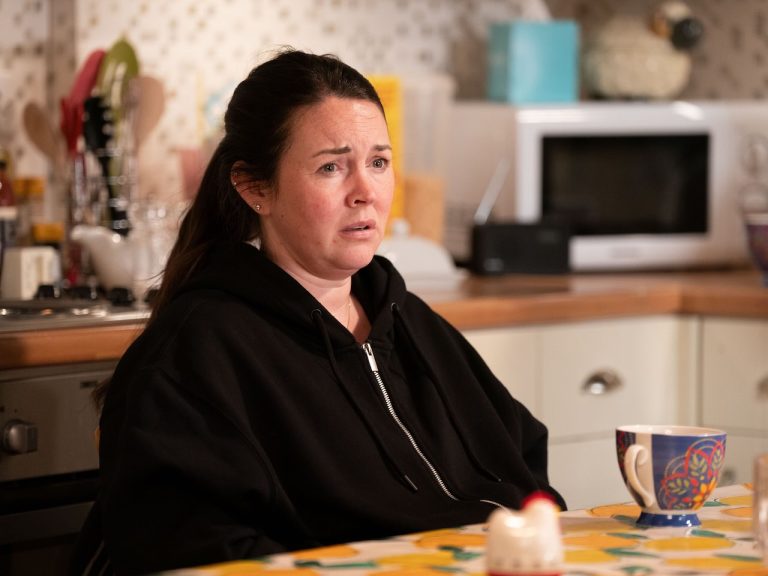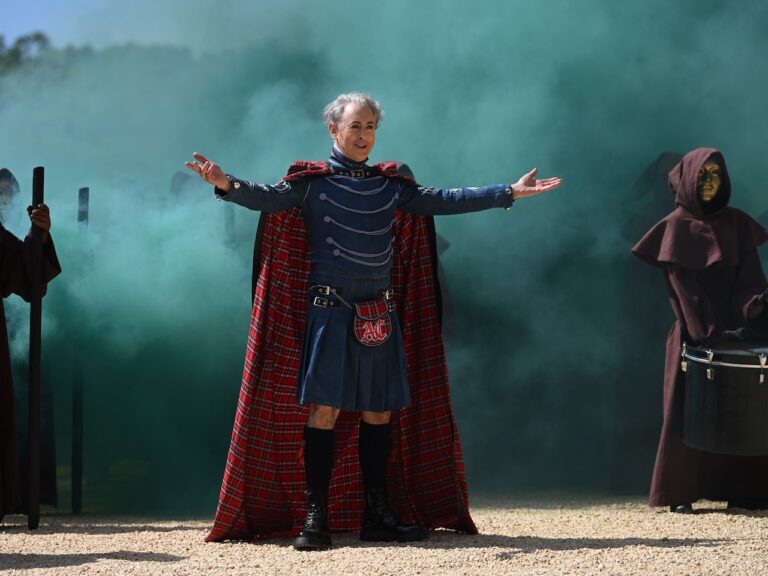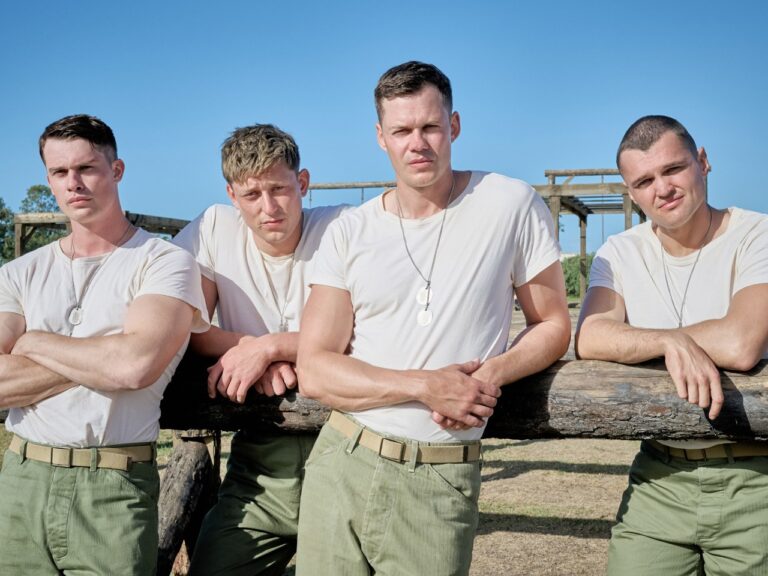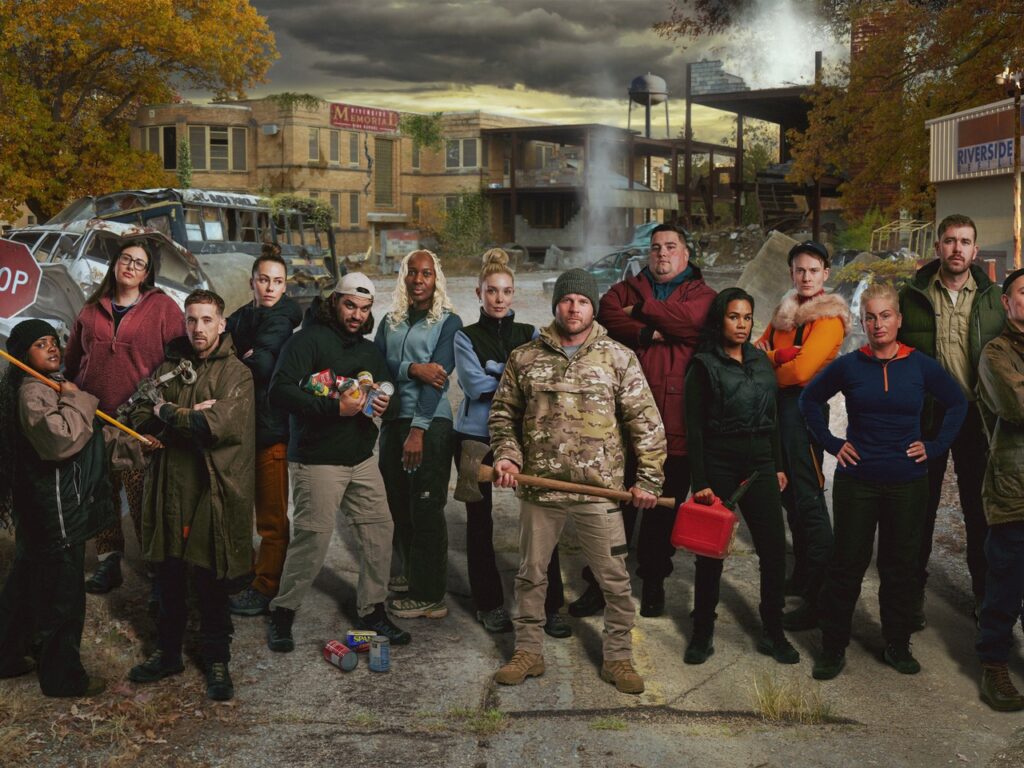
The contestants of Apocalypse / © Channel 4/Matthew Salacuse
Apocalypse, a new “social experiment” from Channel 4, puts two groups of contestants (aka “survivors”) in an abandoned town in America to simulate what might happen in a post-apocalyptic world.
Initially unaware of the other group’s existence, the seven-part show follows the survivors as they scavenge for food and shelter, while trying to form a cohesive community as a band of strangers.
The 14 survivors are drawn from a diverse array of backgrounds across the UK and Australia – including a mechanic, a paramedic, a farmer, a chef, a psychologist and a social media influencer.
Apocalypse launches tonight at 9pm on Channel 4 and streaming.
Scroll on to meet the survivors…
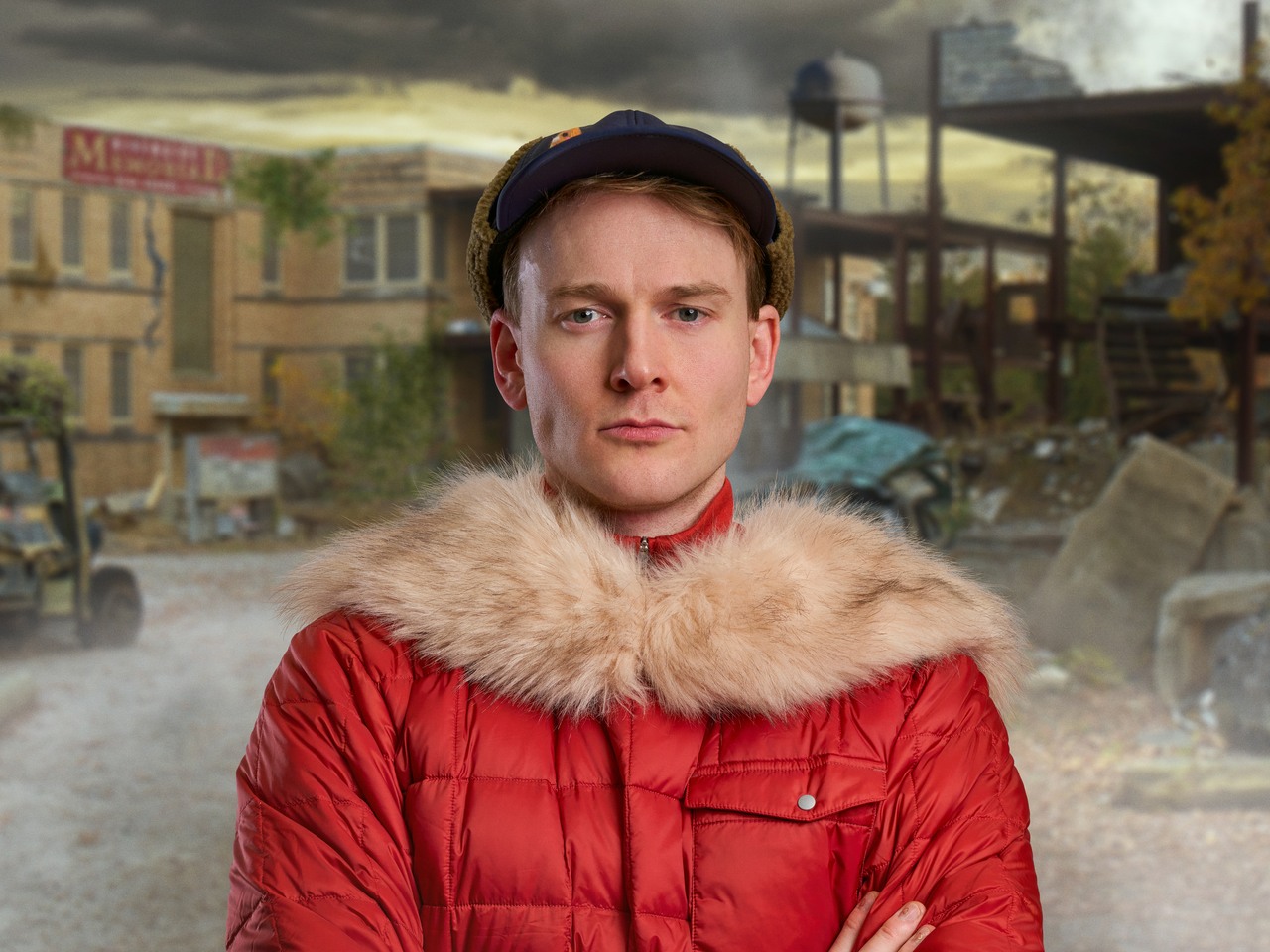
Bertie
Age: 34
Job: Theatre director
From: London
Why did you want to take part in Apocalypse?
“I create immersive experiences for a living and have been for about ten years and this felt like a chance to take part in it, rather than organising it myself. It’s a bit like being handed an immersive theatre ticket, except all the stress of putting it together is someone else’s problem while you just get to exist inside the apocalypse.”
What skills stand you in good stead for the show?
“Being a jack of all trades. I’m reasonably capable across most things without being brilliant at any one thing specifically (though I’m sure there’s something I’m genuinely bad at). That versatility, and being someone who can adapt and fit in, was what I was confident about going in. Ironically, fitting in became one of the harder parts of the experience, because everyone in the group had such a strong personality of their own.”
How did you react when you first arrived in the town?
“It felt like the best piece of immersive theatre I’d ever experienced. It was also genuinely intimidating as I like being organised and compartmentalising things, and the scale of it, with every building presenting a new unknown, made it feel like we were up against the city itself as much as anything.”
Was conflict between the two groups of contestants inevitable?
“Yes, completely. I think it’s a very human instinct to be neighbourly in theory but hostile the moment your neighbours start taking your supplies. It’s part of why the social-experiment side of the show came through so strongly: things started adversarial, and slowly, hopefully with me pushing more of a peacekeeping approach, moved toward wanting to work together instead. In real life I’d rather make friends than enemies, so having an ‘enemy team’ from the outset was genuinely unsettling.”
Were there moments where you genuinely contemplated quitting?
“It was only right near the end, the last couple of days, that we were genuinely ready to leave. There was one particularly memorable low point involving a batch of mayonnaise that clearly didn’t agree with me, after not having gone to the toilet properly for about three weeks I was determined not to use the camp’s bucket toilet, so I’d been going out to the woods to dig a hole instead. It ended in a very unpleasant middle-of-the-night incident that left me questioning my life choices rather dramatically.”
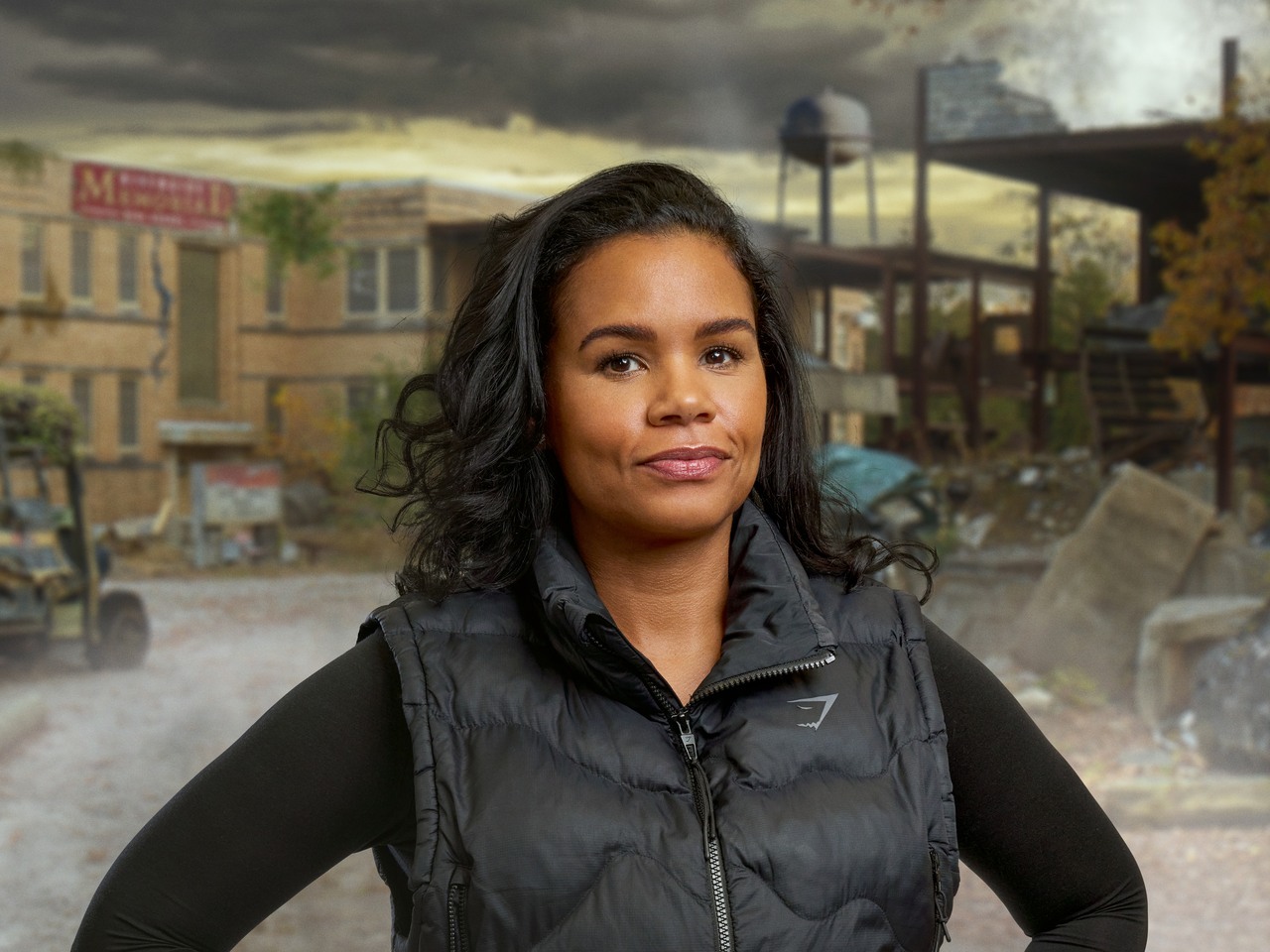
Brooke
Age: 42
Job: London black cab driver
From: London
Why did you want to take part in Apocalypse?
“I like to push myself and I like to go out of the kind of norm. And I just felt like for me it was something that I wanted to experience and challenge myself. And, it was the social side for me, as a black cab driver, I work by myself, passengers get in and go so I wanted to see if I could be part of a team.”
What skills stand you in good stead for the show?
“I really love cooking. I was brought up where we didn’t really have much money, so my mum would make something out of nothing. I really would have liked to have been able to bring that to the table. I also feel like I’m a sociable person; I love connecting with people, it’s my job, I’m chatty. I like to say I’m a people person. So, I thought I’d be able to bring that to the group.”
How did you react when you first arrived in the town?
“Wow, this is really happening. It was just so real that once you’re in it, you’re like, I’m actually in it. It’s a social experiment, but it felt so real. You just lose yourself in it and think, I’ve just got to survive. No outside world, no contact with the outside world. It’s an experience I’ll never get again, well, I’d like to, but you never know. Let’s just hope it doesn’t really happen.”
Did it shock you to discover there was a second group?
“Yes. I was nervous, thinking, oh my God, what is going to happen now, how is this going to unfold? I didn’t want the drama, but it was hard because everyone’s rationing, so it’s survival of the fittest, if you like. It was a bit worrying.”
What did you learn about yourself?
“I learned that I can advocate for myself while still taking a moment to process how I feel. I can be emotional and still stand up for myself, but I’ve learned that taking a beat can help me respond in a way that feels more considered and true to who I am. But it’s so difficult when you’re in that environment to rationalise what’s going on. For me, I realised that what’s really important is community and how important that is to me, and how much I need to be around people I really connect with. And I know how to brush my teeth with coal. It was an experience, but when you haven’t got toothpaste, you’re grateful for the coal, for sure. Even with the water, when you’re boiling it and it’s not clean, it’s mucky, but you’re like, I don’t care. So, in a way, surviving on the most minimal thing is so possible.”
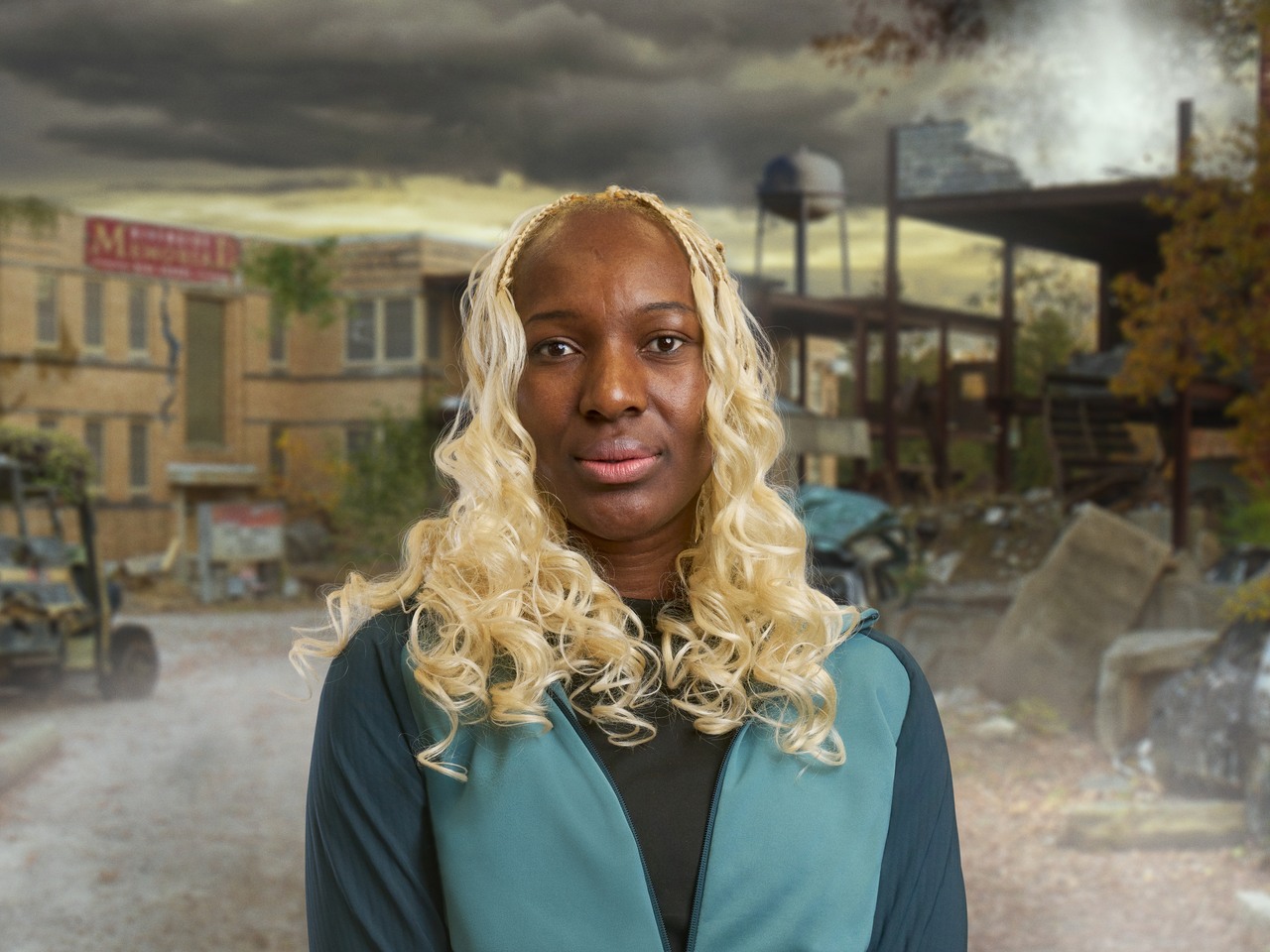
Celia
Age: 43
Job: Politician
From: Wolverhampton
Why did you want to take part in Apocalypse?
“Firstly, I heard it was going to be challenging, and secondly, I heard it was going to be something extraordinary that I haven’t done before. I like adventure, but I also like challenge, and I like being outside my comfort zone. This ticked all the boxes. The more I heard it was difficult, the more I thought, ‘I’m going to have to do this’, because my job is very mentally and physically challenging, and I wanted to test myself in a different sector and environment to see if I could rise to the occasion.”
What skills stand you in good stead for the show?
“What I think I did bring was clarity. Some housemates weren’t clear on certain issues, and I believe I helped bring clarity to difficult moments. I was also more uncompromising than some of the others, who seemed happy to give things away, maybe because they knew there was an end date and didn’t fully live in the moment the way I did. I did also get to cook a few times when the chef went away to the other house, which was nice.”
How did you react when you first arrived in the town?
“It was unsettling. We arrived at night, which meant we had no idea where we were and lost the chance to get basics sorted before darkness. It felt like stepping into another world, and I hate being out of control. We were just looking for somewhere to sleep, surrounded by bushes, and I genuinely thought, ‘This can’t be America, this must be somewhere in Africa.’ I was completely speechless, which is unusual for me.”
Were you shocked to discover there was a second group?
“It completely changed the dynamic. I’d assumed we’d eventually merge and become like a family. I come from a large family myself, and families don’t always agree, but they share enough common missions to stay together; you don’t have to be best mates. So we were finding our rhythm as a newly formed family, and then we started seeing signs that other people were around. I remember thinking, ‘Please, I don’t want anyone else here’ because I like to be in control, and I’d already figured out how to navigate my own group. With a completely unfamiliar second group, no shared history, no loyalty either way, it initially made things much worse.”
Would you encourage politicians to explore an apocalypse experience?
“Honestly, I think half of politicians wouldn’t survive it Some are so used to luxury they couldn’t go a day without food or electricity. I think we should all go, so we understand what it means for the average person to worry about affording an electricity top-up. It’s important.”
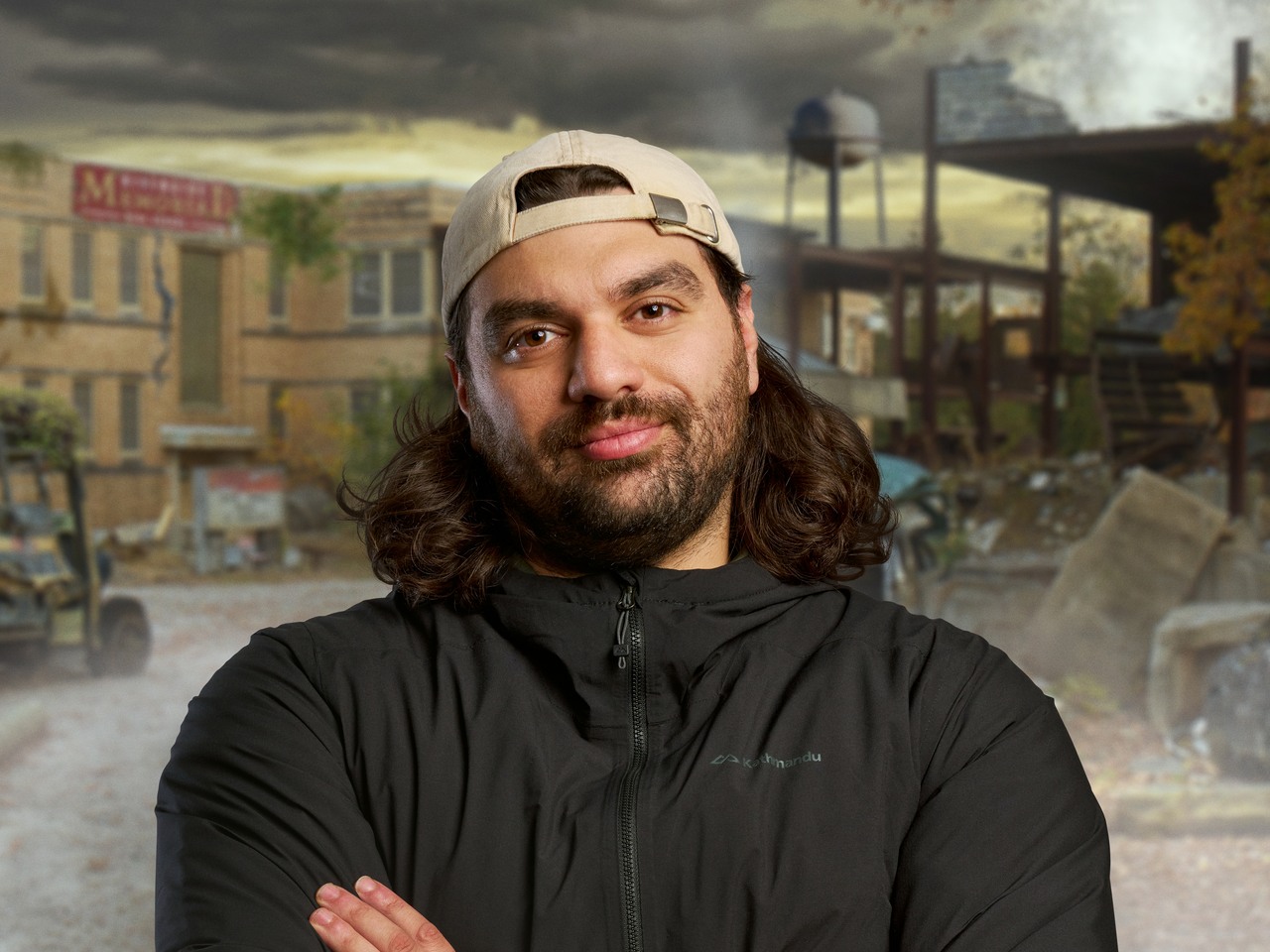
Dean
Age: 30
Job: Chef
From: New South Wales, Australia
Why did you want to take part in Apocalypse?
“I just like new experiences. Most of my life has been seasonal work, moving from one thing to the next, and this just looked like something a bit silly and fun to do.”
What skills stand you in good stead for the show?
“Everyone assumed the chef would just naturally be the food person, and sure, that’s true, but I think my people skills ended up mattering more than anything. Being able to talk to people, get straight to the point without beating around the bush, and read people well. I’m a good cook, but you can only cook for so long before that’s not what matters day to day.”
How did you react when you first arrived in the town?
“I thought it was brilliant. We had this whole town to just explore and play around in, it genuinely felt like being inside a huge video game. I’d had some time to walk around before filming officially started, and it really did feel surreal in that way.”
Was conflict between the two groups of contestants inevitable?
“Absolutely. It’s a survival experience, not some peaceful gathering around a campfire singing together. It’s you or them, essentially.”
Did the experience give you any culinary inspiration?
“Yes, actually, I wrote a cookbook called Twenty-Eight Recipes for Twenty-Eight Days in the Apocalypse. It’s part story, part recipe book, structured around each day we spent in there, since we ate something different most days and there’s usually a story behind why. On the first day we had nothing, that was the train station. After that we had chicken soup, SpaghettiOs, beef stew, a spinach dish, ration packs we found, stolen spam ramen, a spicy chicken dish, sweet beef jerky, roadkill risotto, and we also ended up eating a mother and son goat. The sticky ribs were probably the biggest hit, it’s a Frankenstein sauce made using peaches and cola. Then there was a spicy blue finishing touch, which became the final dessert, a fairy floss caramel popcorn I made on the very last day, extra spicy because I loaded it with hot sauce.”
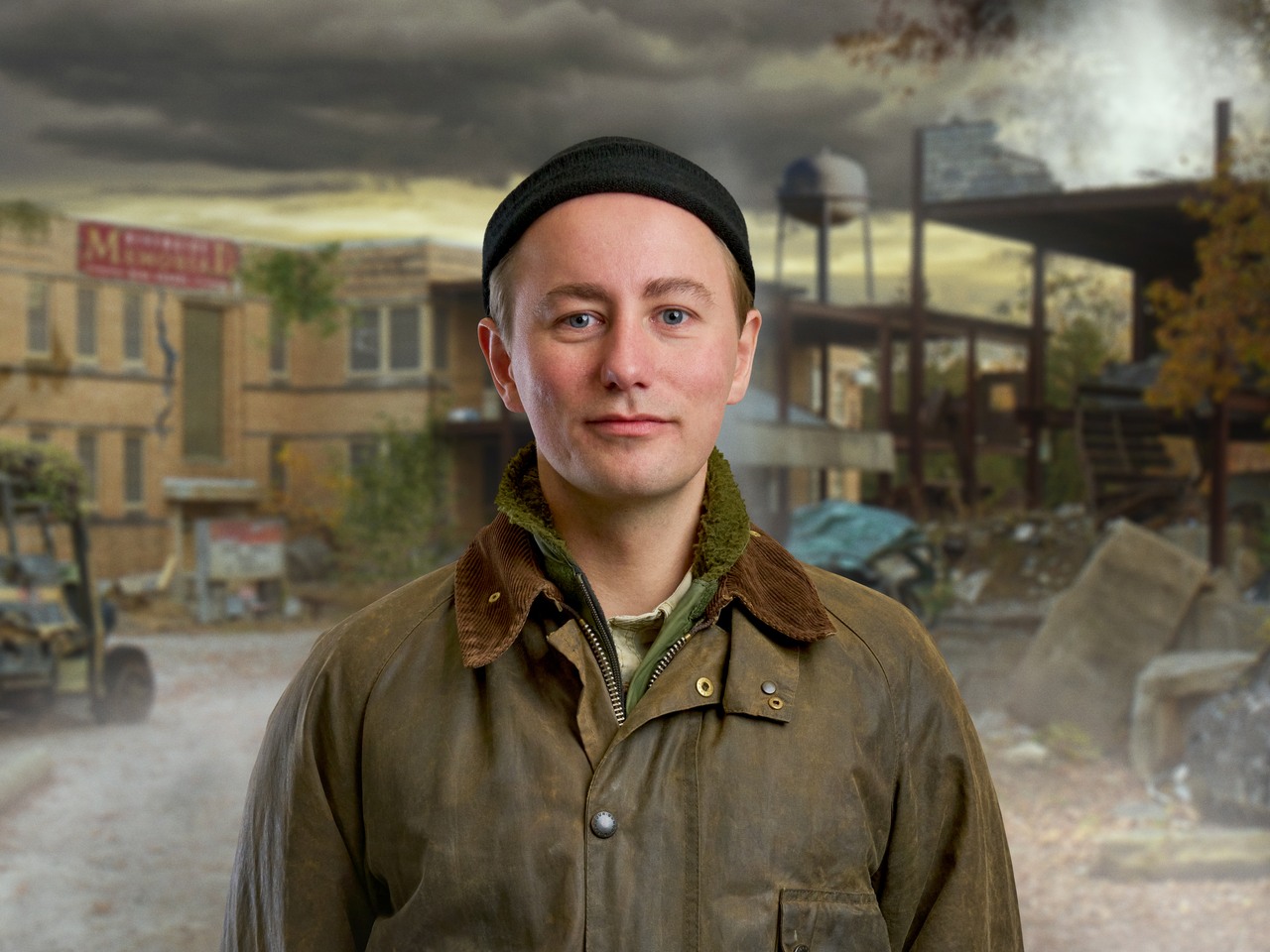
Freddie
Age: 30
Job: Event emcee
From: London
Why did you want to take part in Apocalypse?
“I entered the apocalypse off the back of two gin and tonics, and it was the best decision I ever made. I needed to prove that I didn’t need my air fryer or Mountain Pine Bath Essence. I was right, but I did miss them.”
What skills stand you in good stead for the show?
“I’m a very social person, and through my job I’ve spoken to hundreds if not thousands of people in all kinds of states, usually intoxicated. Going in, I knew that would be one of my main assets, being steady and reliable, keeping spirits up and people’s minds on track. As much as the physical effects of not eating are huge, a lot of it comes down to mentality, so being able to stay calm and keep the group focused mattered a lot.”
How did you react when you first arrived in the town?
“The environment reminded me a bit of Stansted Airport… in that I had no idea where I was, what was going on, or how anything worked. It also had a slightly video-game feel to it.”
Was conflict between the two groups of contestants inevitable?
“It’s easy to say that from outside the apocalypse. On paper, pooling resources is the logical move, and it’s what I’d have said myself beforehand too. But not knowing the other group’s intentions changes everything and you start questioning everything once something doesn’t go to plan.
“There’s also a kind of protectiveness that kicks in even over small things. Five cans of spaghetti hoops and baked beans start to feel valuable, and if the other group is in the same situation, you assume they’ll want them too. You don’t know how desperate they are, or whether they’d take your stuff, so you become insular and cautious. It’s all about the unknown.”
Were there moments where you genuinely contemplated quitting?
“Honestly, no. I was committed to going as long as I could. We used to talk about a scale running from ‘surviving’ to ‘thriving’, and by the end, once we were more in the swing of things, the mindset was that things would always get better from where we were. There’s a stiff-upper-lip optimism to it and if you complain, you do it in a comedic way. By the time we were closer to thriving, even having the odd ‘dinner party’, made the feeling shift to almost not wanting to leave, rather than wanting to give up.”
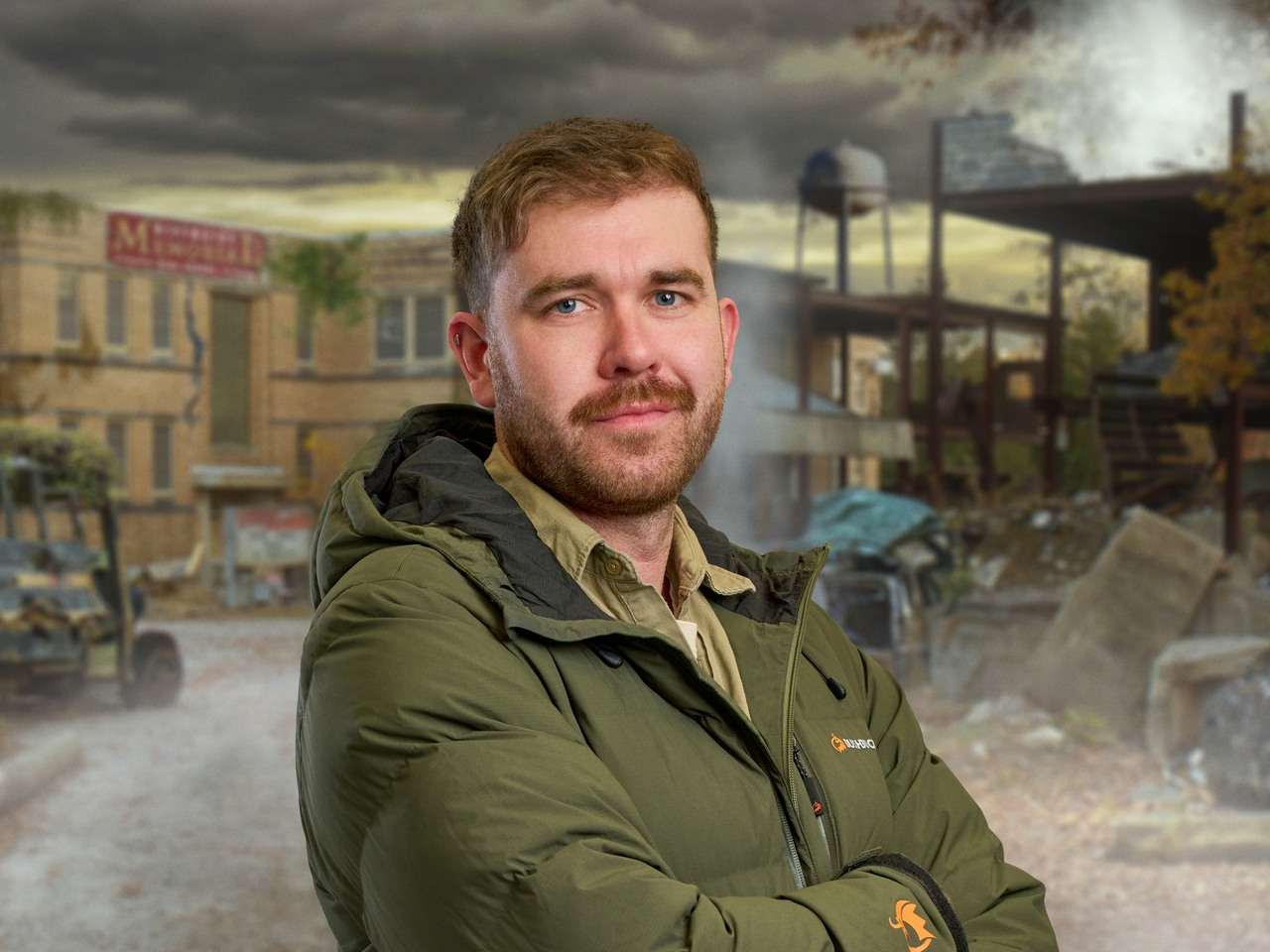
Ioan
Age: 33
Job: Farmer
From: Carno, Wales
Why did you want to take part in Apocalypse?
“I probably just wanted to challenge myself and put myself out of my comfort zone. I’m a farmer from the middle of Wales who sits on my farm and does all my farm stuff, so first off, a city is uncomfortable for me, I don’t like being there. An abandoned city is even more so, because I’m doubly lost. So, yeah, just trying to put myself out of my comfort zone and see if I could survive. I wanted to thrive more than survive, so see if I could do that, really. I think that’s why I did it.”
What skills stand you in good stead for the show?
“I think quite a few of my skills were common sense. Starting a fire is basic knowledge; if you can’t start a fire, you’re not going to survive. Fishing, I’d never fished before going in there, so I learned that on the job. I didn’t do much tinkering or building and kind of let people who said ‘I’m really good at that’ carry on, and if they failed, then I’d try. I think it was more that I hunted a couple of animals, but that’s only because some people wouldn’t be comfortable with it, I suppose, but I’m used to that kind of thing.”
How did you react when you first arrived in the town?
“I was completely overwhelmed, really. I didn’t realise the scale, the size, the destruction, the lack of stuff there. I didn’t realise how smashed up everything would be, how run-down and ransacked the buildings would be. My first impression was, oh, this is way worse than I thought it was going to be. It’s dark, it’s cold, and this place sucks.”
Was conflict between the two groups of contestants inevitable?
“I thought when I first saw the second group they were actors, pretty useless actors. But yes, it was such a shock to see someone else on the however-many-acre patch of land. I think I was the one who instigated the entire tension from day one. So, it was inevitable, wasn’t it, limited food and resources, with a lot of people, there’s always going to be competition.”
Did you learn anything about yourself being there?
“Yeah, that I haven’t got very much patience for lazy people, or people who can’t be bothered to do stuff. My patience for people is way thinner than it probably should be. I should probably realise not everyone can do the same thing as me at the same time. And maybe I need a bit more communication and talk to people instead of thinking everyone can read my mind.”
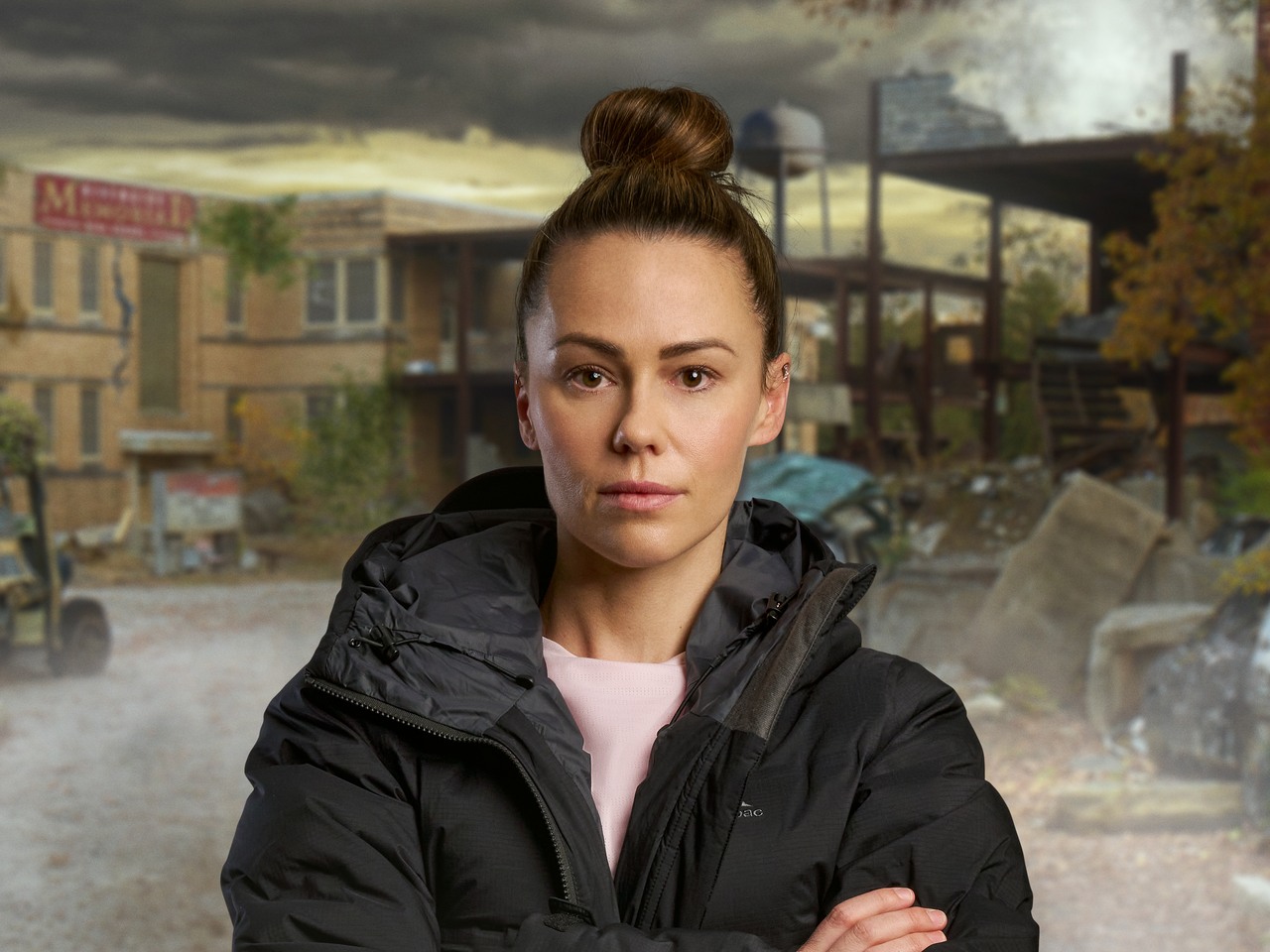
Kelly
Age: 37
Job: Paralympian
From: Geelong, Australia
Why did you want to take part in Apocalypse?
“I just love pushing myself past what I think I’m capable of. I guess I like proving myself wrong, and I love adventure. I’ve been a mum for ten years now, I’ve got three kids, and I hadn’t set myself any real challenges since competing at the Paralympic Games or powerlifting. So, I think I needed to show myself I was still capable of pushing those boundaries. Even being a mum, I can still do this kind of thing and show my kids what I’m capable of too.”
What skills stand you in good stead for the show?
“I’m pretty strong, so I knew I could contribute physically, whether that was cutting wood, lifting things, or generally helping. But more than that, I’m a people person, I like talking to people, and I felt I could bring positivity into difficult situations, keep things uplifting where I could. It turned out that was harder than I expected once we were there.
“You just don’t know what you’re capable of until you try. That’s been true for my whole life. I never avoid something because of my leg or because of what I’ve been through, if anything that’s exactly why I do try things, because I know we’re all capable of more than we think.”
How did you react when you first arrived in the town?
“It was scarier than I expected. I remember thinking, this is genuinely a rundown, abandoned city, there’s barely anything here. The sun went down quickly that first night, and we slept in a train station on cardboard boxes, still in our clothes. Halfway through the night I remember thinking to myself, what have I done? I kept asking myself if this was going to be the entire experience, because it was such an eye opener, and honestly a hard night.
“Once we saw more of the town, I just kept thinking, how are we going to make this work? There were buildings, but not much else. I remember thinking, we just must keep looking and figuring it out. Those first few days really made me question how I’d build shelter or find food, but eventually you just do it, you find a way. It was mind opening in that sense.”
Was conflict between the two groups of contestants inevitable?
“I think so, yes. As soon as you’re in that kind of situation, your guard goes up almost immediately, because you’ve formed your own group, even if only over a few days, and food is scarce, and you’re focused purely on your own survival. You don’t know what the other group is about or what they want, so the walls go up straight away, regardless of anything they’ve done. I don’t think any of us expected it to escalate quite as badly as it did between the two groups.”
Were there moments where you genuinely contemplated quitting?
“Completely, there were many of those moments, and I didn’t expect to feel that way as often as I did. I got unwell after the first week, and it wasn’t only about that either, it was missing my family and everything else piling on top. I cried a lot and said many times that I wanted to leave.
“Early on, I used to set myself small goals, telling myself just to make it to day ten, then once I’d made it, aiming for day twenty, and I kept doing that to push through.
“It was conflict with the other team which triggered this. It got to a stage where we were trying to reconcile with them, but it put me in a difficult position, and I kept asking myself why I was putting myself through this when I could be home with the children I missed so much.”
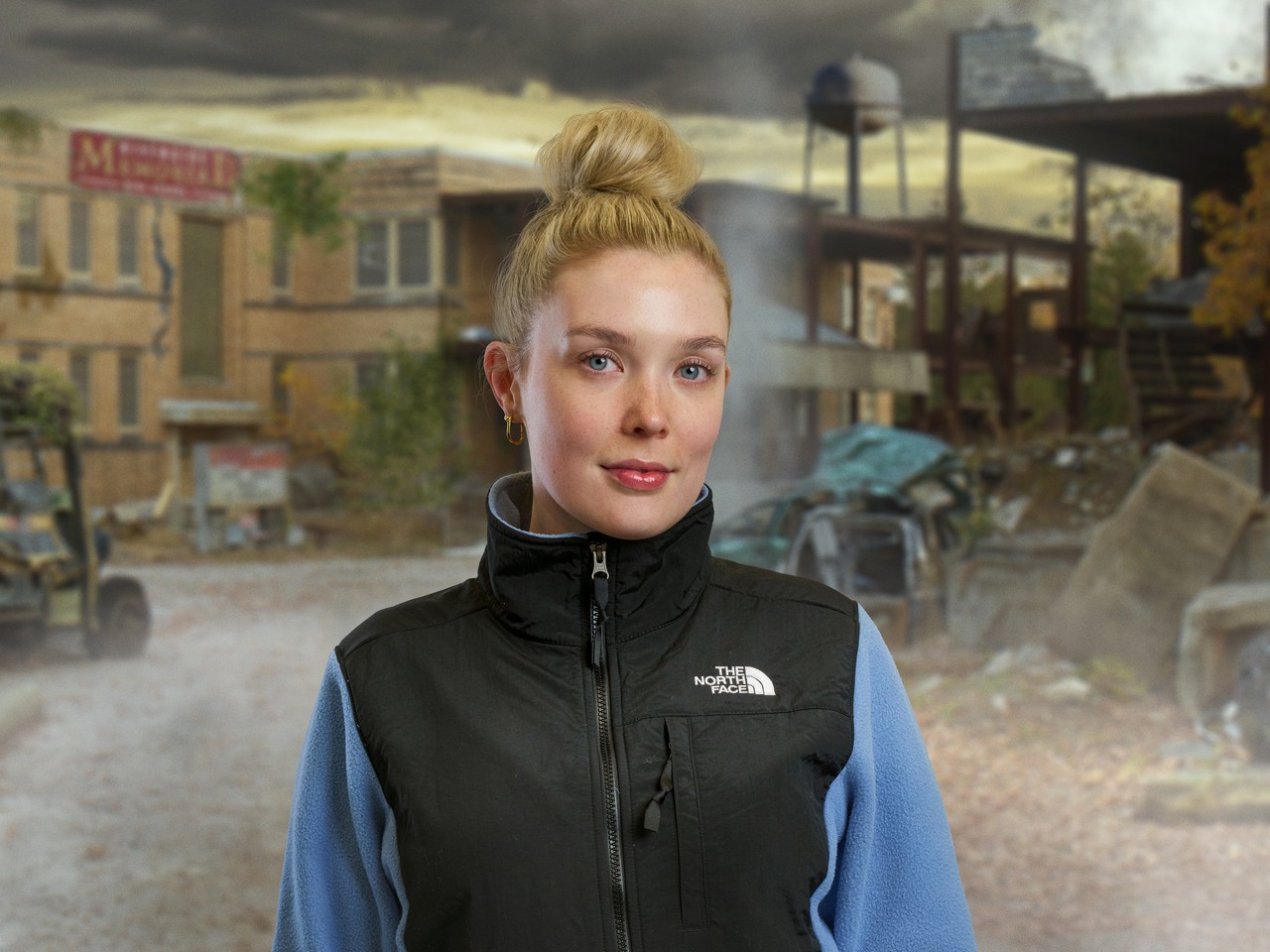
Kiera
Age: 29
Job: Psychologist
From: New South Wales, Australia
Why did you want to take part in Apocalypse?
“Part of it was a joke, and the other part was genuinely wondering whether I could survive in a situation like that. I’ve always thought, if I was kidnapped or stranded somewhere, would I be able to cope? So, I wanted to test myself. But at the same time, part of me thought there was no way I could do it.”
What skills stand you in good stead for the show?
“Nothing physical, that’s for sure. I thought being a psychologist would be useful, that I’d be able to hold good conversations, build a sense of community, and keep people positive. I genuinely thought everyone else would struggle and I’d be the one playing therapist and helping people through it. In reality, I probably struggled the most out of anyone, and everyone else ended up getting me through it instead.”
How did you react when you first arrived in the town?
“My very first reaction was that this was insane, this was huge, this was crazy, but also, let’s go. I was in go mode, focused on finding food and shelter. It was only a few hours later, lying on the cold floor with car mats over me, that the full reality hit and it was the worst feeling.”
What surprised you most about the other survivors in your group?
“When I first met everyone, I thought, what a random group of people. Completely different jobs, backgrounds, people from all over the world. I honestly thought there was no way we’d all get along. So, I think what surprised me most was that we actually became a family, despite being so different, coming from totally different worlds. I’d never met anyone from Birmingham before, for example. It really shows how human connection works, especially in a survival situation, you band together despite the differences.”
Were there moments where you genuinely contemplated quitting?
“Day two, honestly. I remember thinking, how am I supposed to do this for another twenty-six days? Then day five hit, when I genuinely thought my body was shutting down. My family still ask me how on earth I managed it, and honestly, I couldn’t tell you.”
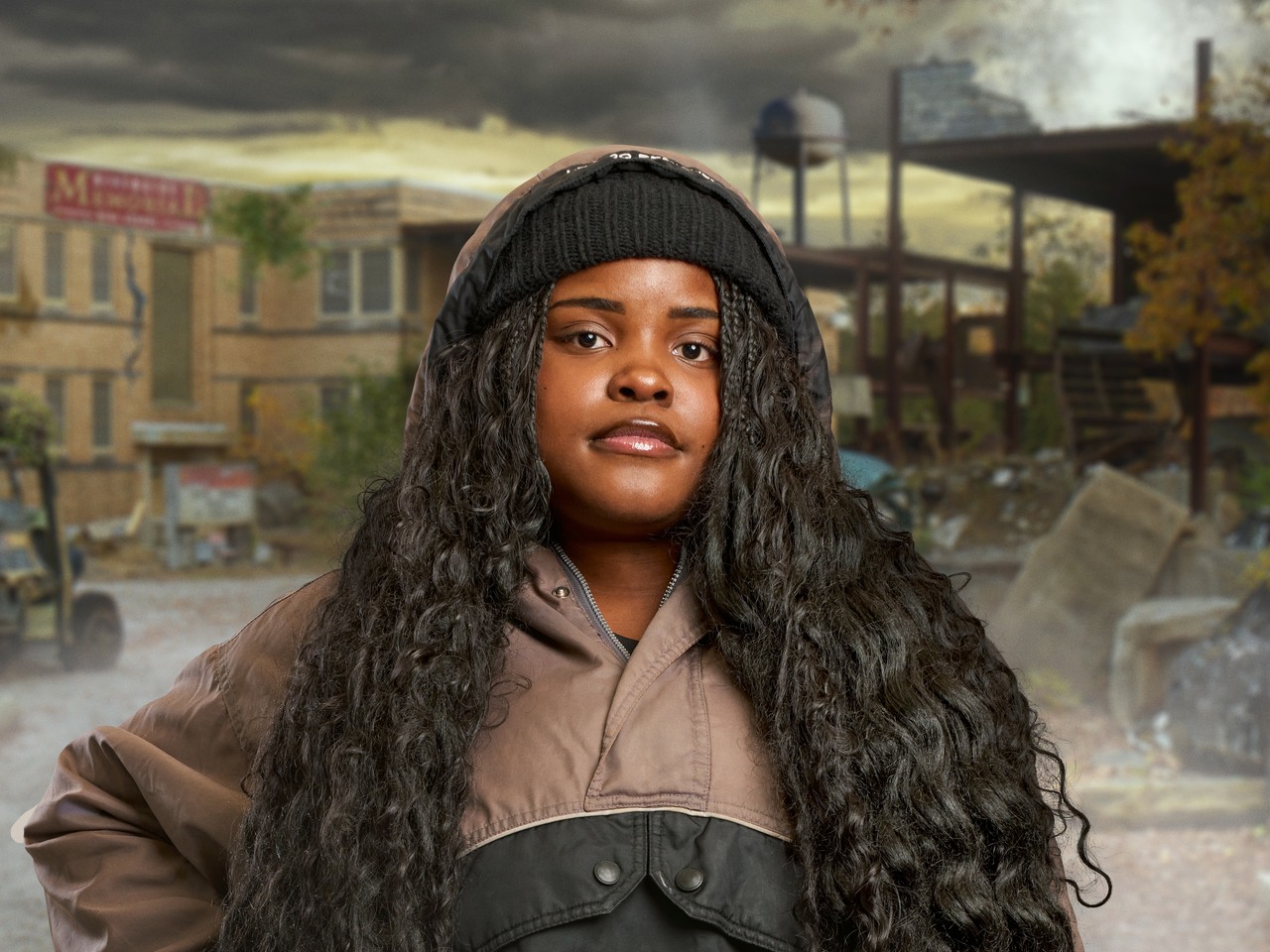
Kyra
Age: 20
Job: Student nurse
From: Northamptonshire
Why did you want to take part in Apocalypse?
“I love post apocalypse themed shows. I was obsessed with them growing up, like Hunger Games. I’m a huge Disney nerd, so this just seemed really cool. Also, with my experience of camping and stuff, I don’t know why, but in my head I thought it would be so easy. “
What skills stand you in good stead for the show?
“I don’t think I was as physically capable as some of the others, like Lou. I think what I brought was more that element of fun. But I also think I was quite headstrong. It feels like a distant memory now, but I remember having strong opinions and ideas about how to do things, including how to communicate with the other group.”
How did you react when you first arrived in the town?
“I thought it looked wicked, so cool. I didn’t really know what to expect, but when I walked in, it felt like it was taken straight out of a book or a movie. I loved how immersive it was, I just wanted to explore, explore, explore. But then as the sun started going down, it hit me that we actually needed to survive, we actually needed to find supplies. I was so particular about it, wanting to search every single car and every corner to find everything we could. It felt like a game, like a simulator, like being in The Walking Dead.”
What surprised you the most about the other people in your group?
“How diverse everyone was, that really surprised me. I’m not very fit, so I assumed everyone else would be really macho and I’d be the odd one out. But everybody had their own strengths that they brought to the group, and I learned so much from all of them. Even people who weren’t as physically strong taught me things. For a young person like me, waking up next to those people and realising how much you could learn from them, even though they were so different from me, was incredible.”
Were there moments where you genuinely contemplated quitting?
“I can’t quite remember what week it was, but one low point was not being able to go to toilet for about two weeks, I really didn’t like that. There was also a stretch, maybe mid-way through, where we were all just moping around like zombies. I remember thinking I actually can’t do this, wondering why I was choosing to put myself through it, whether it was some kind of self punishment. I missed my dad, I missed my own bed. There wasn’t really one big dramatic moment, it was more just the grind of doing the same thing every single day and wondering whether we were actually progressing at all.”
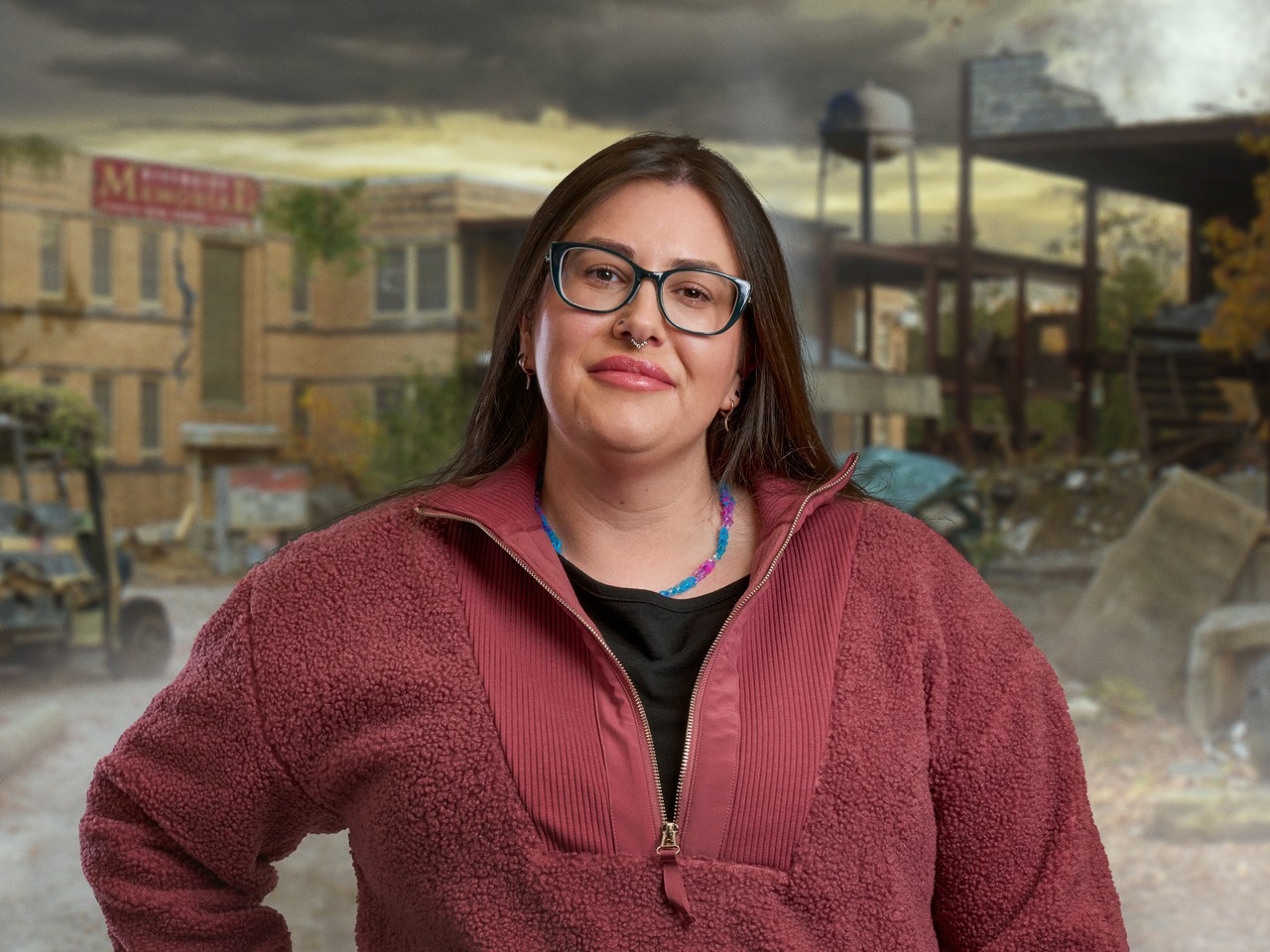
Laura
Age: 38
Job: Paramedic
From: Bristol
Why did you want to take part in Apocalypse?
“It wasn’t really something I’d ever considered doing, particularly not at this stage of my life, when I’m busy with my career and busy being a mum. It was a bit of a crossroads in my life. Everything was just starting to settle down again, and I thought, why not pull the rug out from under my own feet again and survive an apocalypse. So, I went for it, and it all happened very quickly.”
What skills stand you in good stead for the show?
“Being a paramedic, I’ve been in the ambulance service for coming up to 20 years, so there’s not much I haven’t seen, though the job always finds something to surprise you. I felt confident that if there were any medical emergencies I’d be able to assist. I’m also used to situations changing very rapidly, one moment sitting down with a cup of tea, and three minutes later in the middle of a traumatic incident, with no time to worry or panic, you just get on with it. I feel I’m unflappable, and that calmness and ability to cope when things go wrong is something I’ve honed over the years.
“Before joining the ambulance service, I also worked with animals, at a zoo, a veterinary practice, and on a farm, so when animals came into play, I felt comfortable and it brought me a lot of joy. “
How did you react when you first arrived in the town?
“My first reaction on seeing the town was shock at what had happened there. Part of my role is assessing a scene very quickly and making fast decisions as a paramedic, so my eyes were darting around trying to take in where the dangers were, where the safe spots were. There were derelict buildings and cars that looked like they’d been picked up and dropped from the sky, and I found myself wondering what had caused it all. It was a real shock to see how ruined the world looked. During COVID I and many colleagues worked all the way through it, and I was off for a couple of weeks after catching it myself; going back in for the first time during lockdown and seeing how empty and spooky the streets were felt very similar to walking into the apocalypse, that same feeling of unease, imminent danger, ominous and dark, like something major had happened.”
Did it shock you to discover there was another group?
“Not entirely, because in a real apocalypse there would likely be little pockets of survivors everywhere. What surprised me more was that while our group was focused on building our shelter and home exactly how we needed it to survive, the other camp was willing to resort to certain tactics very early on. I felt there was no real consideration from the other side of forming an early alliance, sharing skills, and putting heads together to really excel, and instead they went straight to treating it as conflict and war. It shocked me how quickly the other side chose that path, which then forced our side to change tactics, defend ourselves, and build up our defences to stop further theft. I’m still half joking but genuinely a bit bitter about a can of Spam that was stolen, a food I don’t even eat in ordinary life but haven’t wanted to buy since.”
Were there moments where you genuinely contemplated quitting?
“For me, it was around the two week mark that things got harder, even though there was more regular food by then, it still wasn’t enough. You stop even feeling hungry in the normal sense, past the stage of a rumbling belly and general hunger, into a generalised weakness and malaise, where even your thoughts feel like your brain is underwater, and putting a simple sentence together becomes hard, so I was probably talking even more nonsense than usual. What changed things for me was talking to the rest of the group and realising I wasn’t alone in feeling that way.”
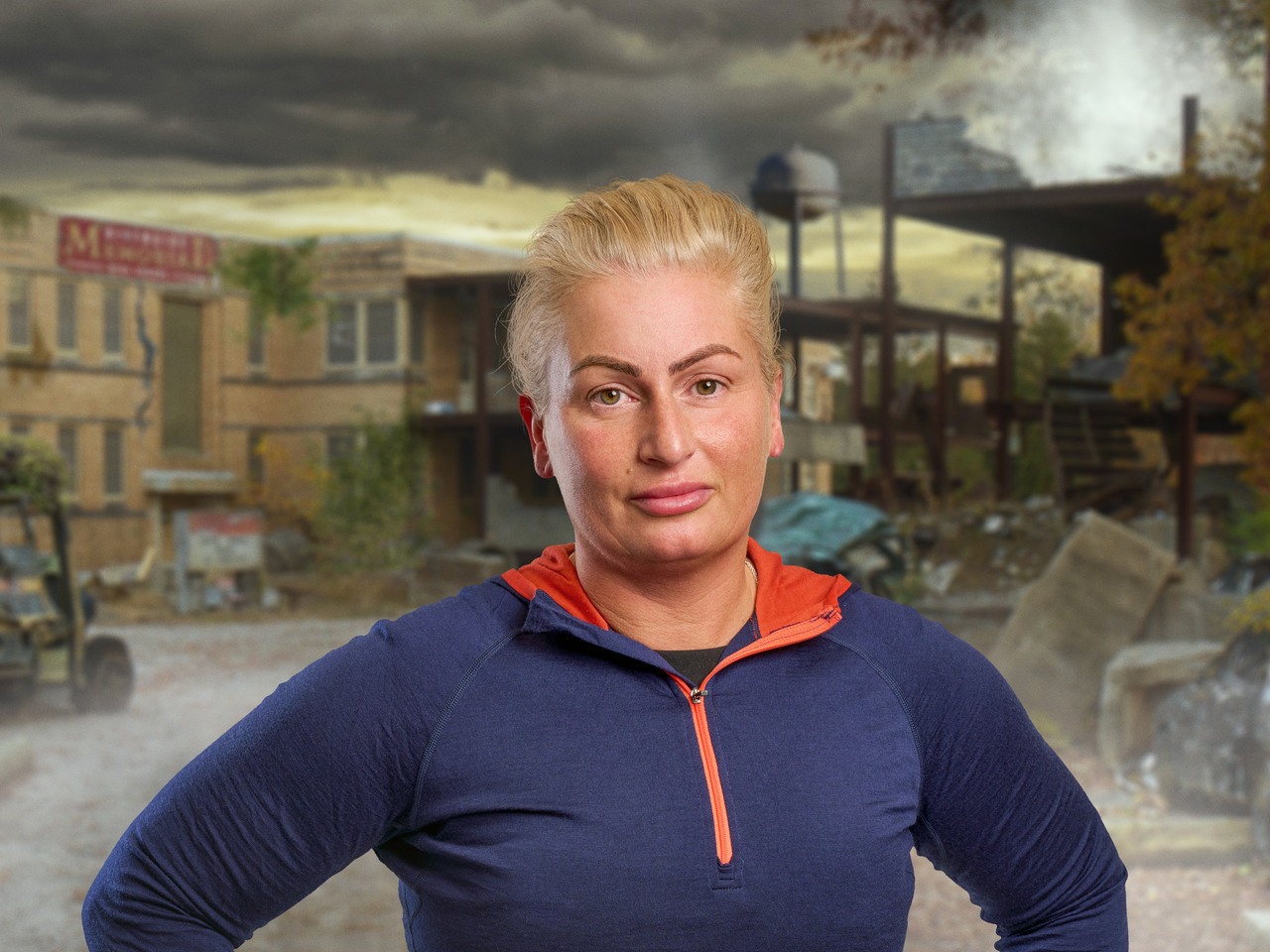
Louise
Age: 43
Job: Mechanic
From: Birmingham
Why did you want to take part in Apocalypse?
“I wanted to take myself out of my comfort zone. I’ve built a nice little life for myself, and I think we take a lot of things for granted day to day, so I wanted to see what would happen if I was stripped right back to nothing to see whether I’d survive, how I’d cope. My mum found the whole idea hilarious, because she says I’m glued to my phone constantly, so she genuinely didn’t know how I’d manage.”
What skills stand you in good stead for the show?
“In my day-to-day life I’ll have a go at pretty much anything, whether that’s mechanics, plumbing, building a wall. I’ve rewired plug sockets and done my whole daughter’s bedroom myself. I don’t rely on other people, and I’m strong both mentally and physically. So, I think I brought hard graft, energy, loyalty, and good values, along with hopefully a bit of motivation for others too. I hope I brought a dose of reality to the group.”
How did you react when you first arrived in the town?
“I thought it was amazing, and genuinely overwhelming, I couldn’t believe a place like that actually existed. It looked challenging, cold, spooky, a bit scary. My instinct was just to get stuck in and crack on straight away.”
Bertie described you as the mother of the group. How did that feel?
“They all called me Mama Lou, which I loved. It’s nice, isn’t it? I naturally look after people in normal life, including my daughter and my dog, and at the time my dad was also seriously ill, so I think I was already in a bit of a fight-or-flight, look-after-everyone mode. I think you must bring people with you if you want to succeed as a group. If I hadn’t had my team around me, I probably would have fallen flat on my face. Actually, I did fall flat on my face, quite literally, right at the start I had a nasty-looking injury for the first couple of episodes that probably looked worse than it felt, which I imagine will make a good teaser trailer moment.”
Were there moments where you genuinely contemplated quitting?
“Yes, one in particular, around two and a half weeks in, after a disagreement with Bertie. I was missing my daughter, worried about my dad, and hungry, and I just thought: what am I doing this for? I could be at home in comfort, spending time with my dad, doing normal things and instead I was putting myself through this, surrounded by people who were winding me up.”
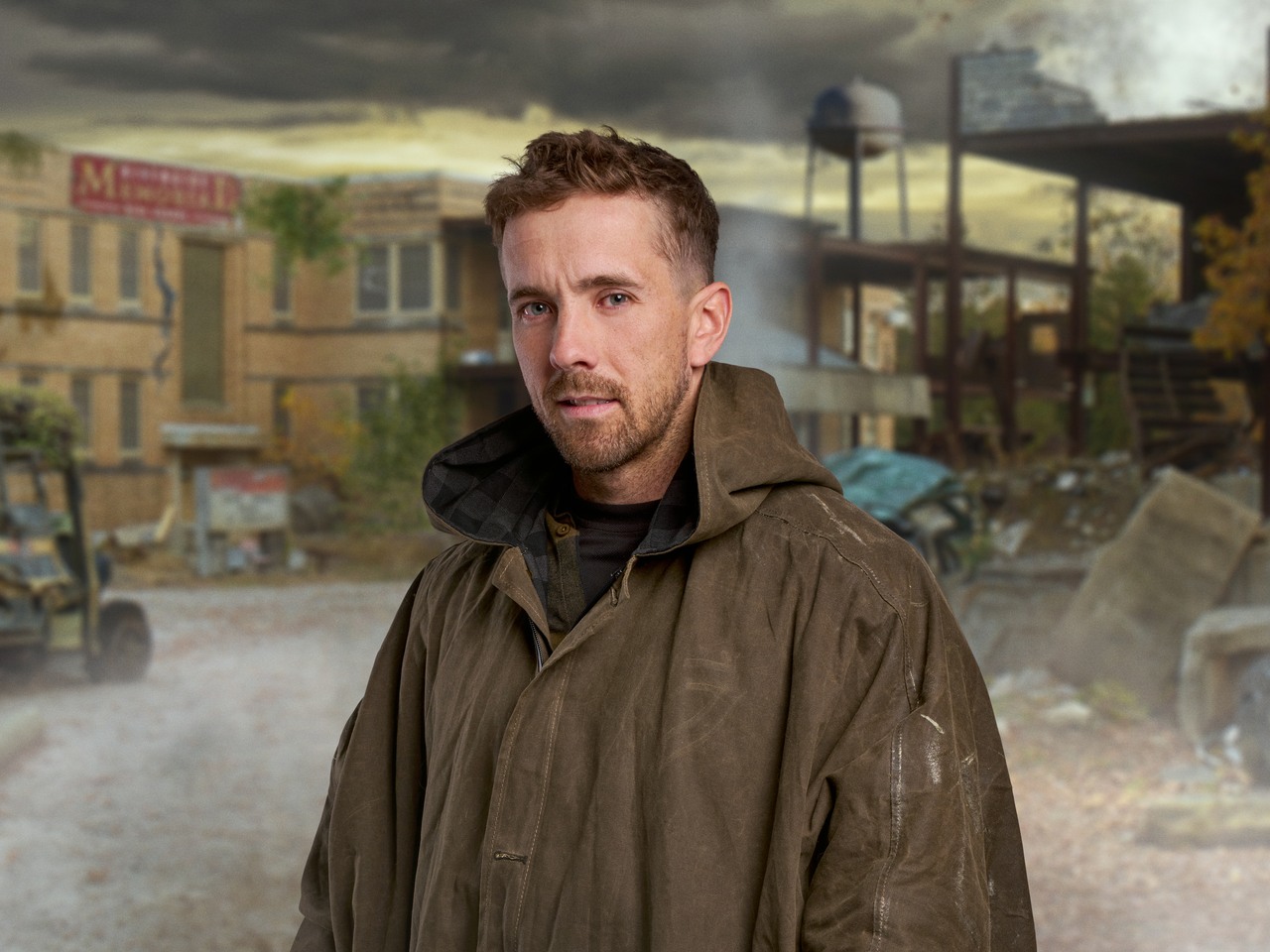
Matty
Age: 33
Job: Diesel mechanic
From: Perth, Australia
Why did you want to take part in Apocalypse?
“For me, it was every guy’s dream. I feel like every guy has this daydream of what they would do in the apocalypse. Everyone has some sort of plan they’ve run through in their head. For me it felt like preparation for potential future events.”
What skills stand you in good stead for the show?
“I was confident with anything technical, mechanical or engineering-related. I knew I could contribute by creating solutions to problems. That gave me purpose throughout the whole experience. I was able to create torches and lighting sources that we used every single night. I built them so they could work with batteries and switches, which meant we could carry lights around with us.”
How did you react when you first arrived in the town?
“We arrived quite late, close to nighttime. The first thing we really saw was an empty field, then we found the train station. My first thought was, ‘This place is huge and empty.’ It looked like we were basically in farmland. I thought it was going to be really difficult to find supplies because there didn’t seem to be many buildings around.”
What surprised you most about the group you were with?
“The biggest surprise was how close we became. At the start, I wasn’t sure about some people. There were moments where I thought, ‘I don’t know how this is going to work.’ But as time went on, we became really close. What surprised me was how quickly we could go from disagreeing completely to becoming like family.
“At the same time, there were moments where different groups struggled to understand each other. I think a lot of it came down to different skill sets. It wasn’t necessarily about men and women, but more about people who had skills that translated and people who struggled to find their purpose.
“For example, we had technical people who could fix things, build things and solve problems. Other people didn’t necessarily have those practical skills, so it was harder for them to find their role. The other team had people with different skills, and everyone contributed in different ways.”
Has the experience changed how you view modern life and what we take for granted?
“Absolutely. The biggest thing I took away was appreciating the little things. Every morning, it took around 30 minutes just to make coffee because I had to crush the beans and boil the water. Then I’d sit down, do my Sudoku and drink it. I remember thinking, ‘When I get home, I’m never drinking coffee out of a takeaway cup again.’ Now, I always have it in a mug. I sit down, stay there and actually enjoy it. Apocalypse taught me to appreciate the journey instead of just rushing towards the destination.”
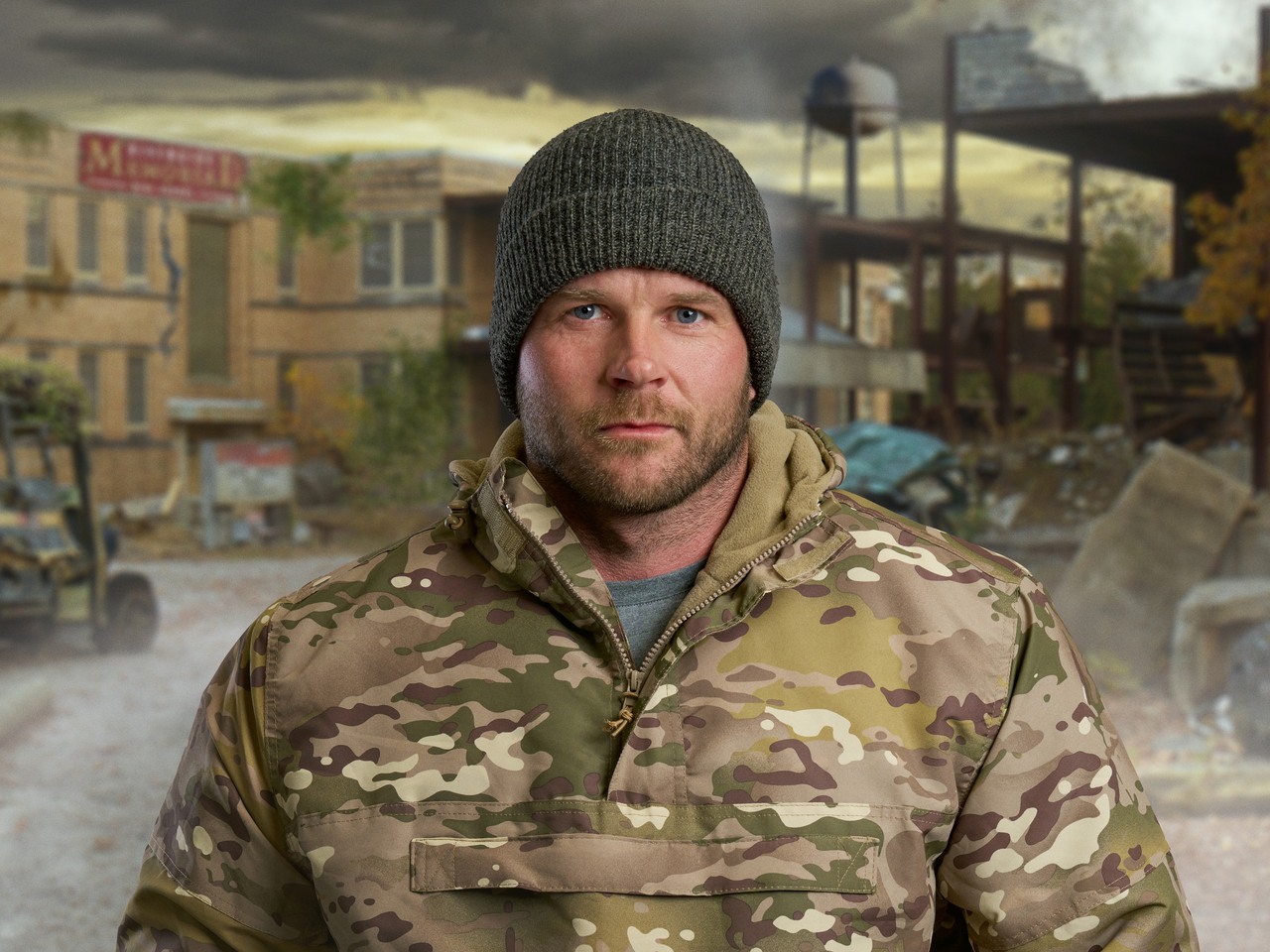
Scott
Age: 42
Job: Beef farmer
From: Barongarook, Australia
Why did you want to take part in Apocalypse?
“I just thought it sounded like a really cool thing to do. It’s also something my late son would have loved, he was always into that sort of adventure. So I thought I’d go and smash it out for him. Really, I did it for him.”
What skills stand you in good stead for the show?
“I’d say my strength, breaking and cutting firewood, and getting stuck into things like the supermarket raid. Maybe also my stubbornness when it came to rationing the food. I also did a fair bit of the cooking, which is funny because I don’t really cook much at home, I mostly just barbecue. But someone had to cook.”
How did you react when you first arrived in the town?
“I was genuinely thrilled. It was so cool. I was looking at all the places I could ride motorbikes, just taking everything in. Walking in for the first time, I couldn’t believe it, I was thinking, how did they build this, this is amazing. I was buzzing, I just wanted to go exploring.”
What about the weather? It’s obviously not Australian weather. Was that something you were prepared for? Did you think it would be tough?
“Not really, there were some nice days. One day the sun was really strong, I washed my clothes and just lay out on a stretcher from one of the ambulances, sunbathing. Then other days it was properly snowing. The first night was pretty cold because we hadn’t got the fire going yet, but I still slept fine, got enough rest. After that, once we got the fire going and gathered firewood, we kept the room nice and warm, somewhere between sixteen and nineteen degrees the whole time. I never let that fire go out once.”
Has it changed the way you think about contemporary life or the things we take for granted?
“Not really, I’ve always lived pretty minimally. I don’t even watch television normally, and I’ve lived out of the back of my truck before, so in a sense I was already done a bit of minimal living before I went in.
“Honestly, I think people in the western world take far too much for granted generally. I spend a lot of the year living in Thailand, and people there have so little but always seem genuinely happy. Meanwhile here, we have everything at our fingertips and people are still miserable. I think life’s just made too easy for us in a lot of ways.”
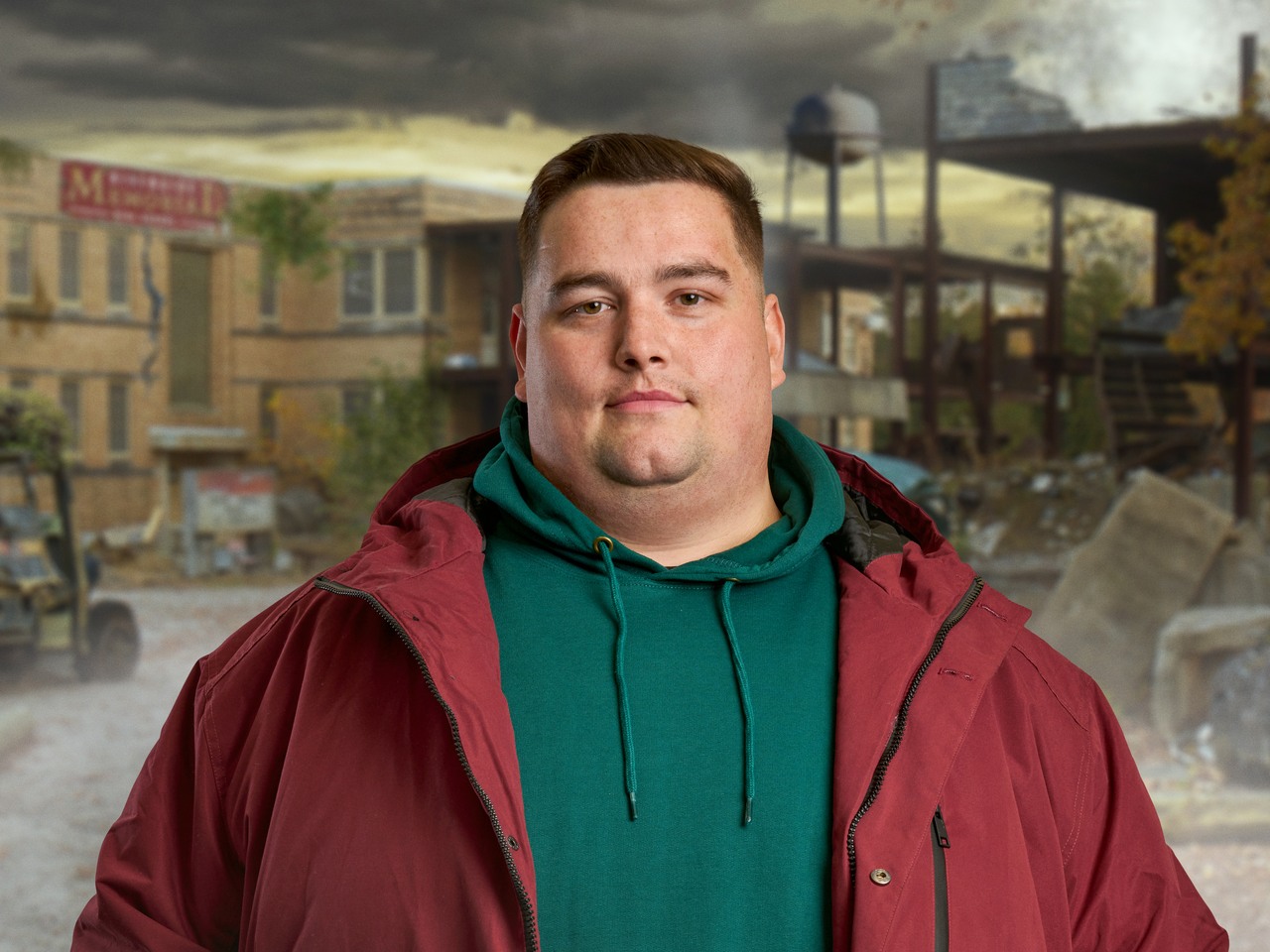
Steven
Age: 32
Job: Content creator
From: Lincoln
Why did you want to take part in Apocalypse?
“I really wanted to challenge myself in a way that I’d never done before. I also wanted to take part because it sounded wild. Being stuck in an abandoned city for 28 days with no food, no water, no running electricity, I thought, ‘You know what? I can do that.’ I watch all these shows and think, ‘Yeah, that’ll be fine.’ So, there was definitely a little bit of delusion involved. A little bit of wanting to test myself.”
What skills stand you in good stead for the show?
“I think my humour, my morale and the way I connect with people. I’m good at some things and terrible at others, but connecting with people, finding out what brings them joy and lifting them up is something I know I’m good at. That’s something I’m proud of because it didn’t really falter in there.”
How did you react when you first arrived in the town?
“My first reaction was, ‘How do I get out of here?’ From the moment I walked in, I was completely immersed. It looked like a movie set, but there was nobody there. You were just thrown straight into it. There were overturned cars, buildings that looked like they’d been burned down, smashed windows, rubble everywhere. It felt so real that from the moment I entered, I really felt I was in the apocalypse. When I walked out at the end and saw civilisation again, I was like, ‘Oh my gosh, there’s a car!’ Your mind gets completely warped because you’ve spent weeks climbing rubble, seeing broken bricks, smashed buildings and overturned vehicles. The way they created the environment was incredible because there was no easing into it. You were just dropped in there and you were living it.”
Were you shocked to discover there was another team?
“I was completely blindsided that there was another team because we didn’t see them for a few days. When you’re in there, you’re so consumed with trying to find food, find water, band together and create fire that you don’t really think about anything else. It didn’t even cross my mind until the moment we realised all of our stuff was gone and all of our animals were gone.
“I was so surprised by how they turned up because they came with a mission. They came with a message. They came to steal. And the way they approached it was so different to how we would do things because we were a family community. I think the biggest feeling was, ‘Why didn’t we think about this first?’ Running back to our camp with Keira, falling through the snow, I’ve never run so much in my life.”
Were there moments where you genuinely contemplated quitting?
“Yes. I was walking up this huge hill. It was raining, freezing cold, and we were soaked through. We were trying to find food and I hadn’t eaten a proper meal in days. I remember thinking, ‘You know what? I could leave now.’ I thought, ‘I’ve done two weeks. I can be proud of myself. Maybe I could go home.’ But then I heard my mum’s voice in my head. ‘You can do this, Steven. You’ve got this.’ It reminded me that this was exactly what I had been mentally preparing for.”